Location
Rzeszów, Poland. 2019.
Project Team
EOVASTUDIO. Bakpak
Client
Private
Program
Housing. Hotel
Gross Floor Area
17.000 m2
Renders
Brick




Rzeszów, Poland. 2019.
EOVASTUDIO. Bakpak
Private
Housing. Hotel
17.000 m2
Brick
RZESZÓW Multifuncional Building
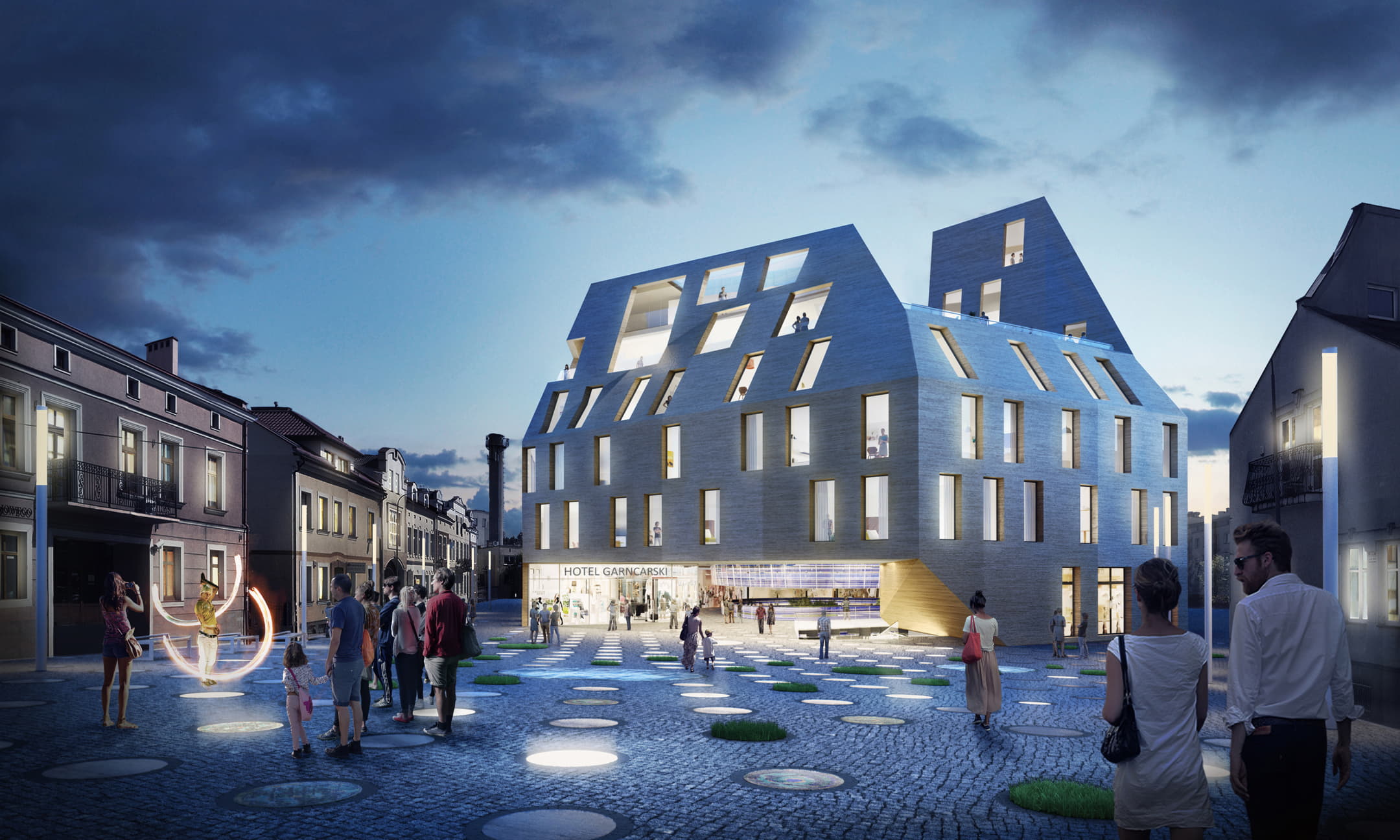
In 2015 the City Council of Rzeszów, a city located in the southeast of Poland and capital of the Podkarpackie region, called a public competition for private investment to build a hybrid building in its historic centre, a sensitive location just a few metres from the Main Square and on a site adjacent to what is known as Pottery Square.
This space owes its name to the traditional ceramic market that was held precisely in this location, an urban void generated by the bifurcation of the old riverbed that crossed this particular point of the city. The competition plot consisted of a hexagonal surface with sides parallel to the converging blocks, the main front of which will once again configure this place of memories.
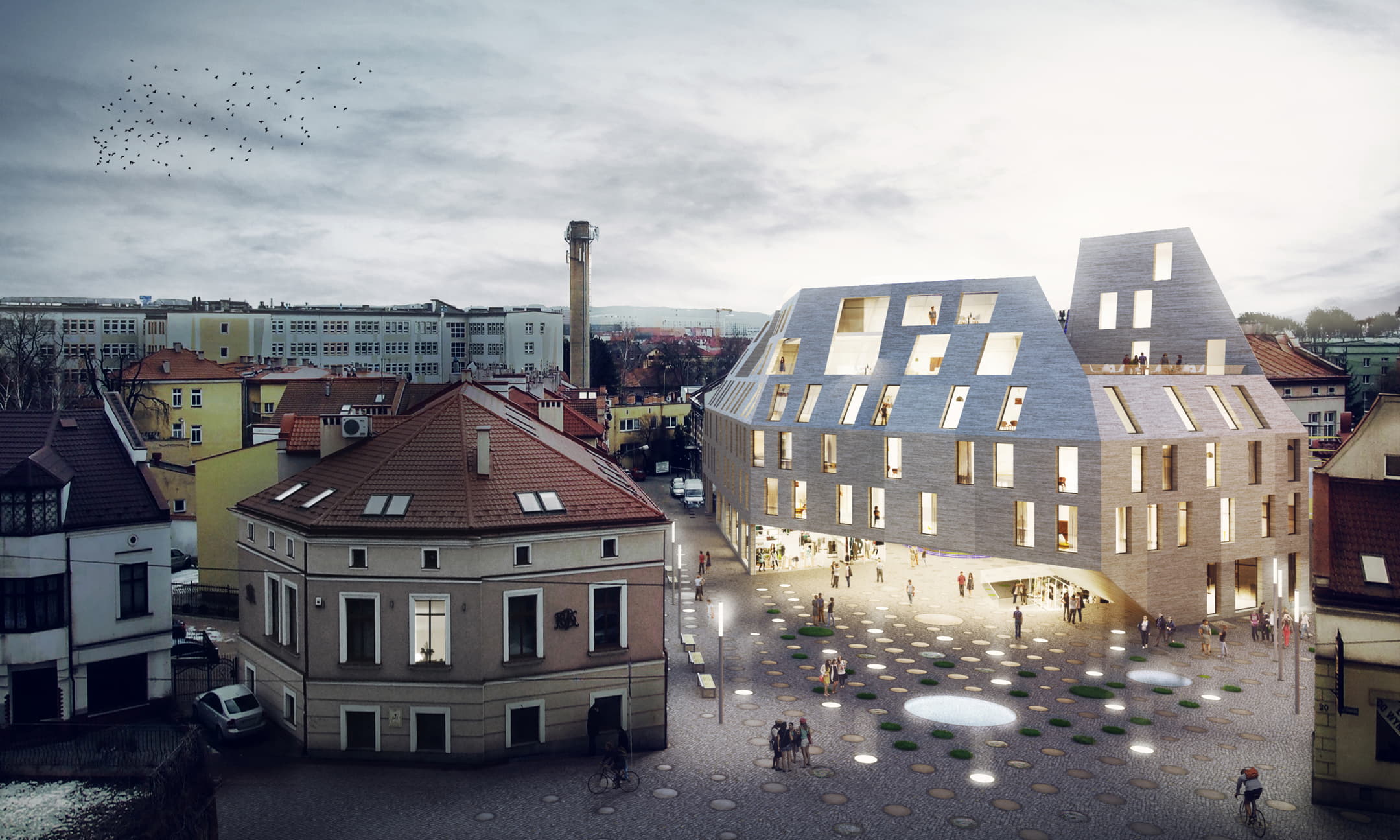
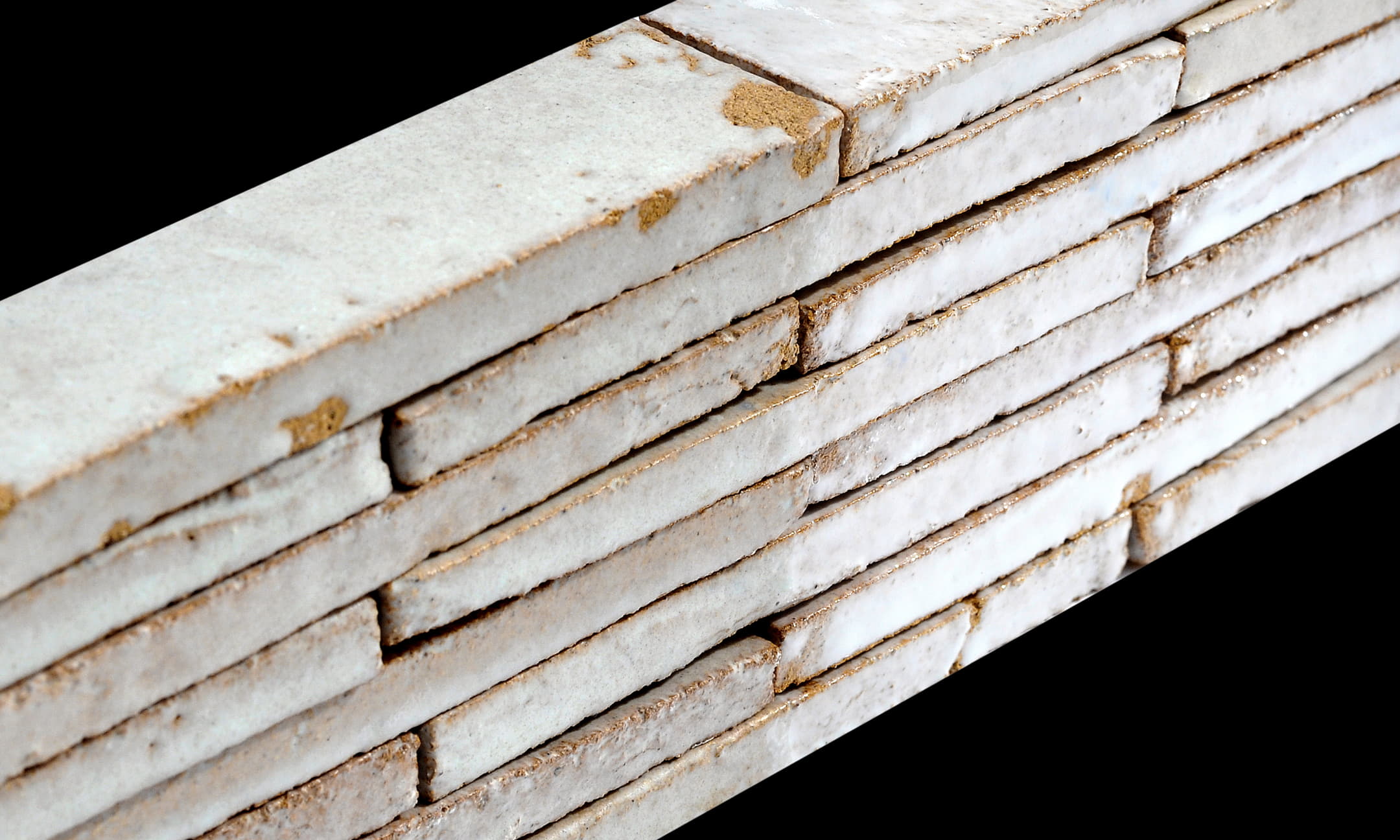
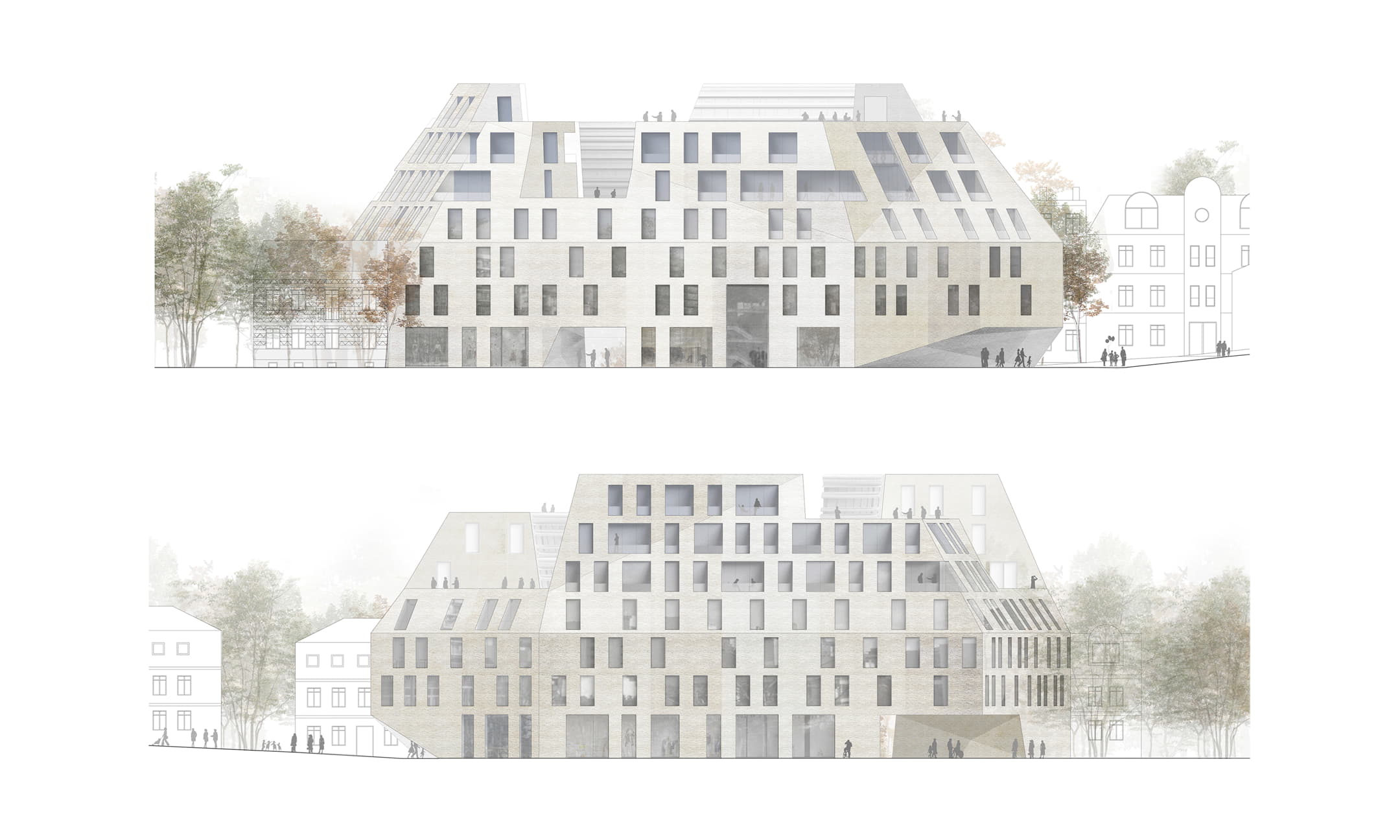
The project is built on the duality between present and past, present represented in the exterior envelope that reproduces the lines of the site and the materials of it´s surroundings, and the past recovered through the evocation of local traditions in the heart of the building.
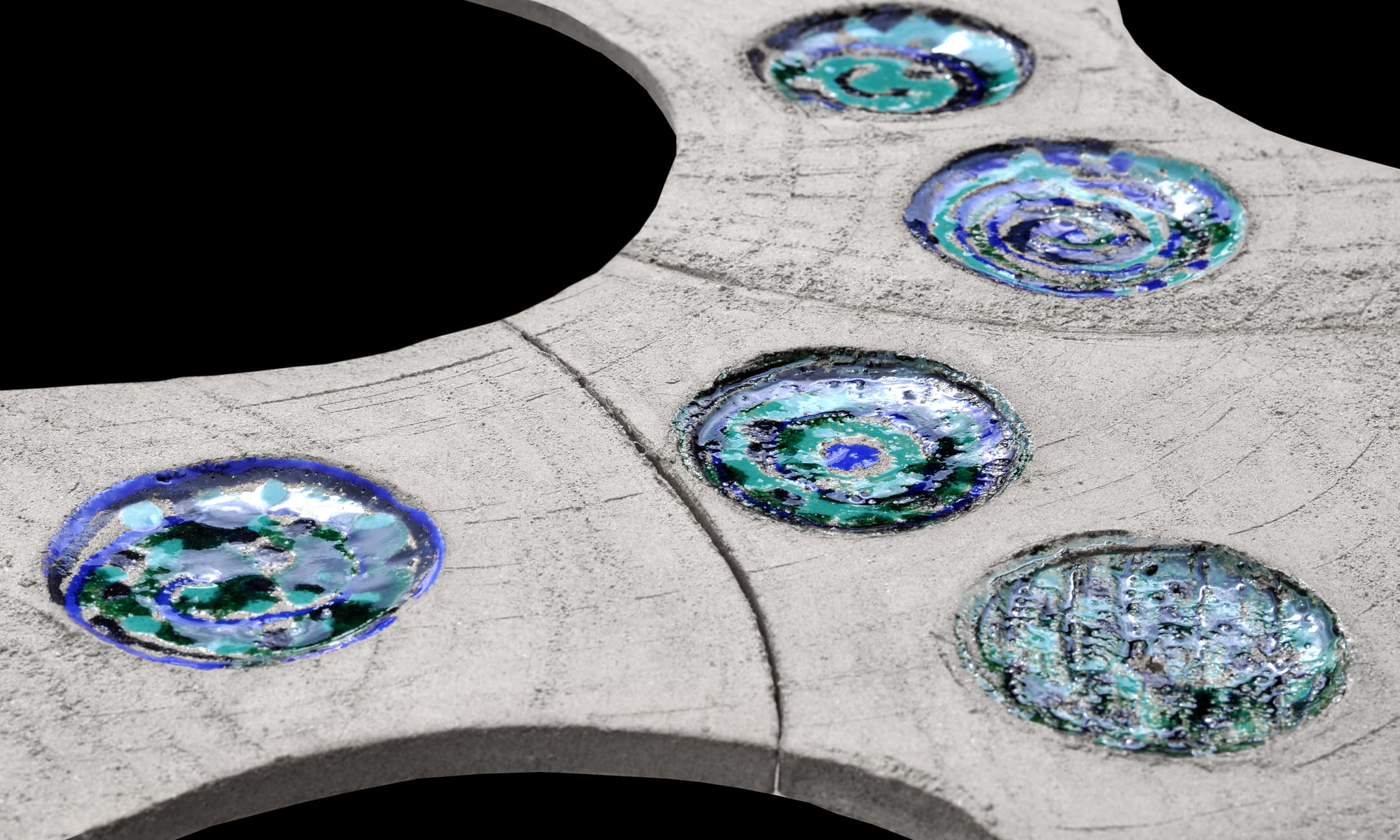
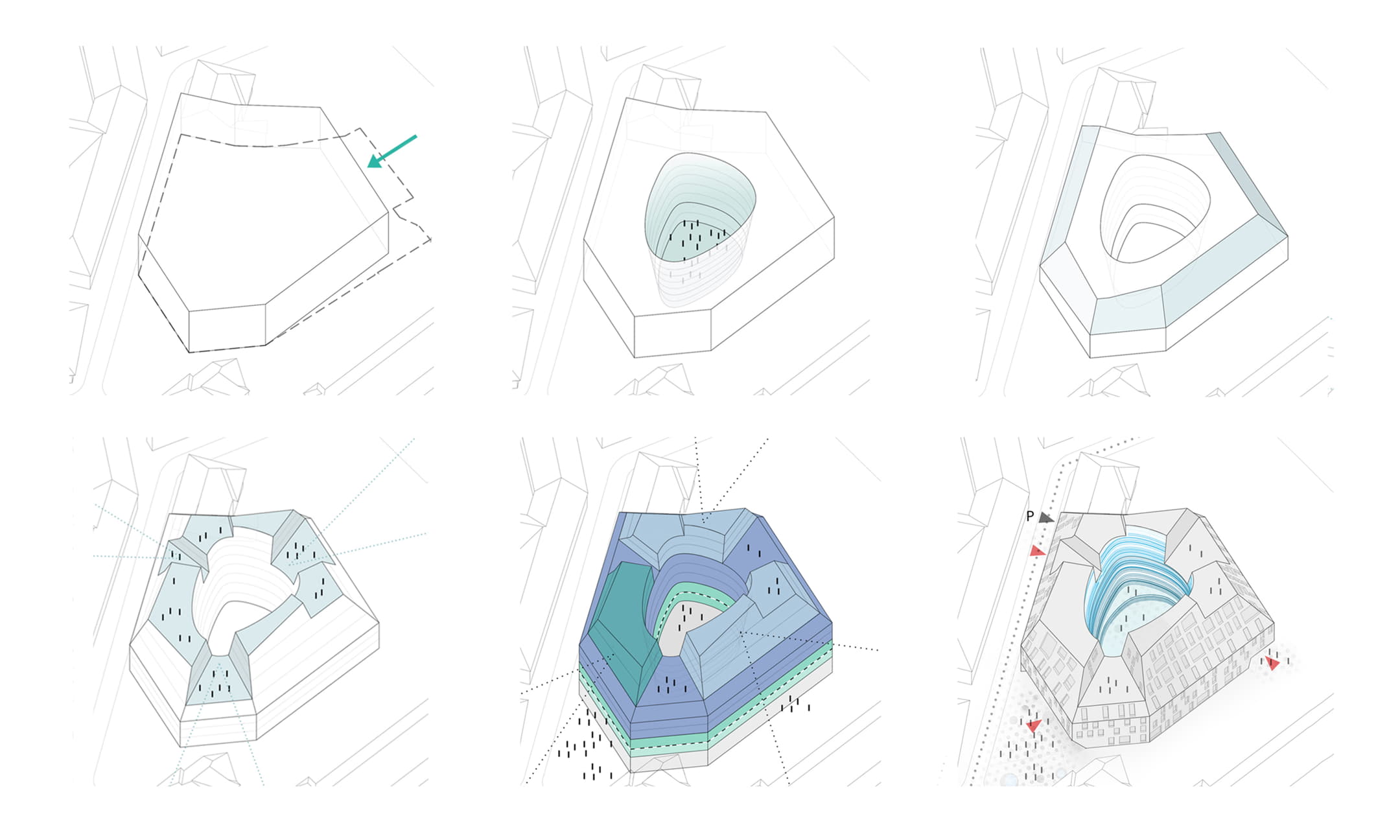
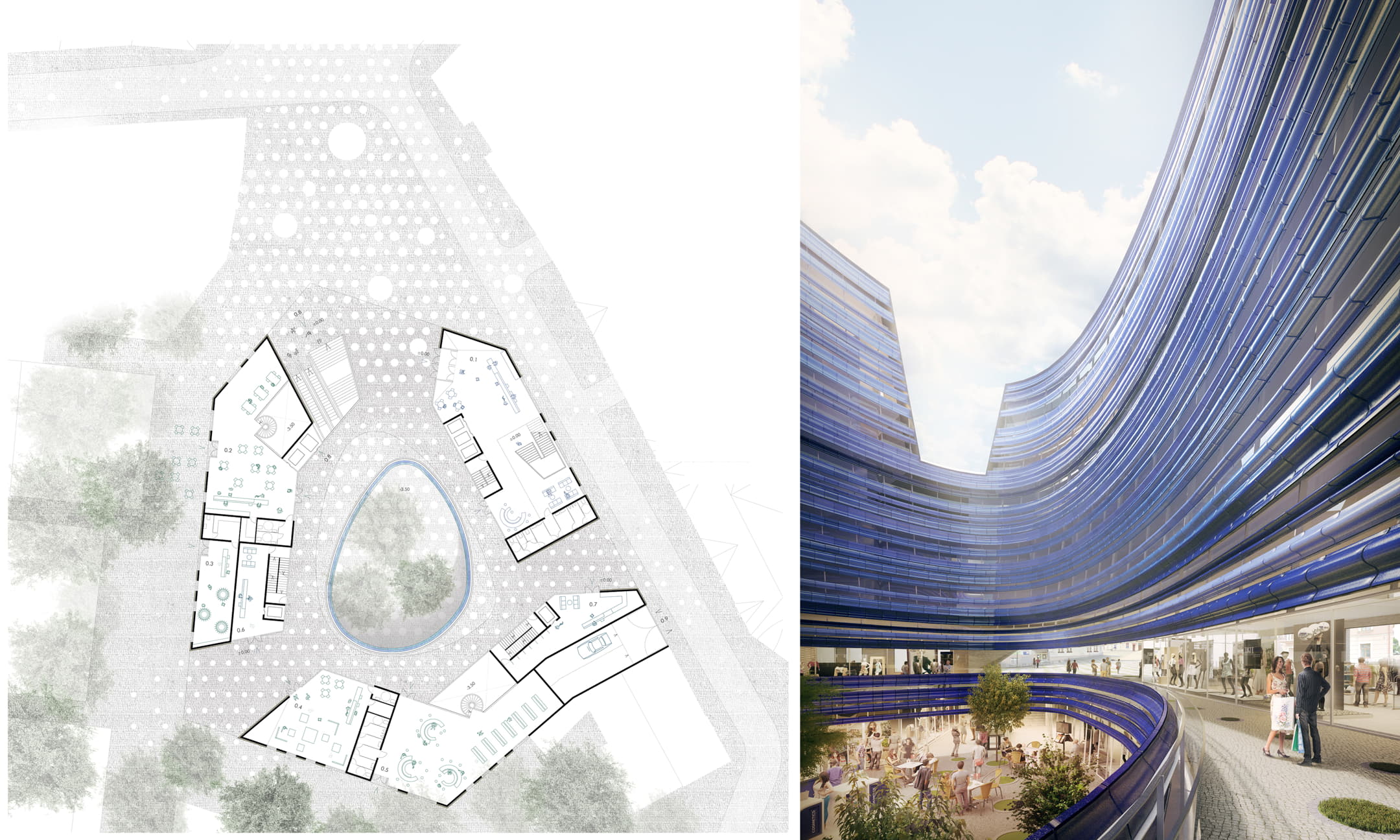
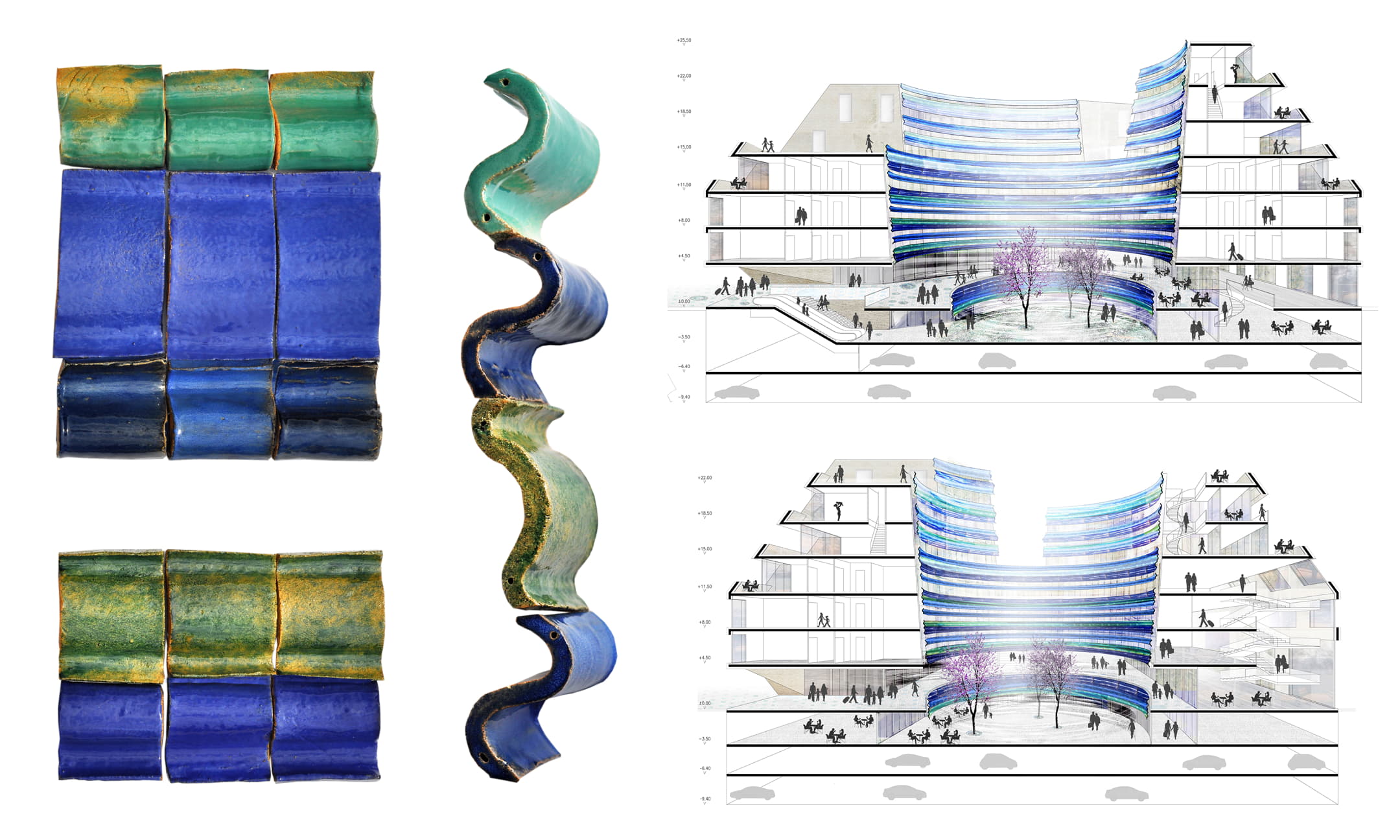
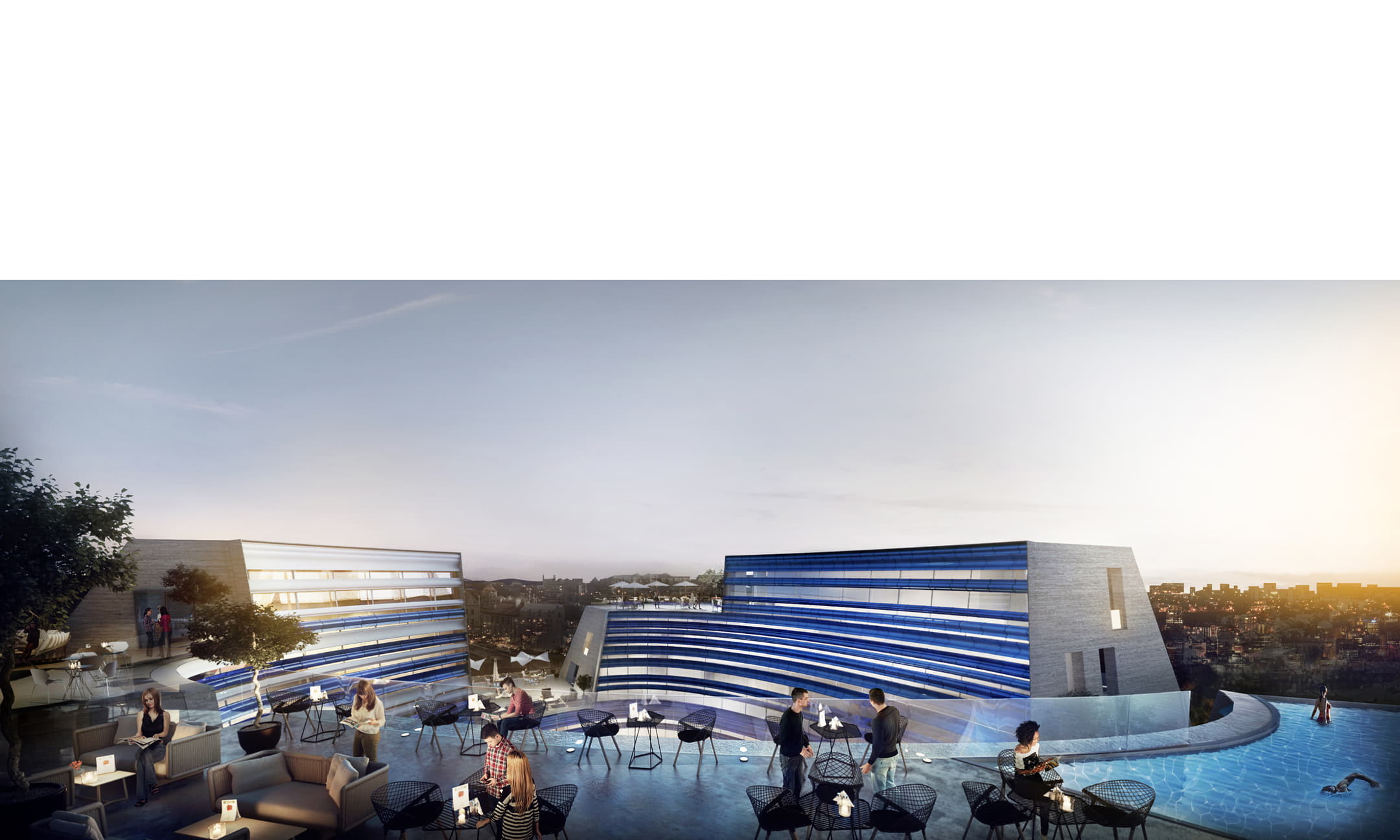
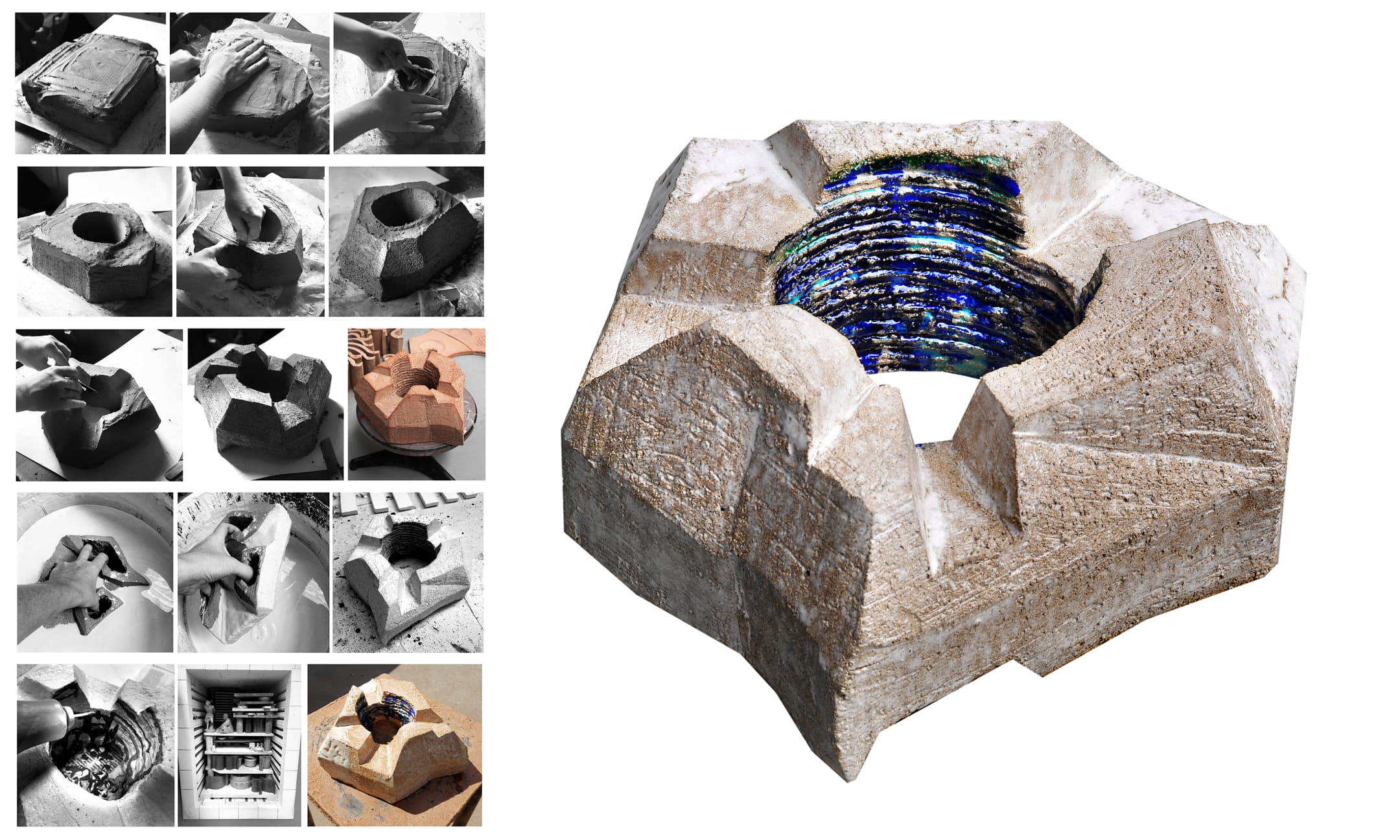
This contrast is represented by the solid, polygonal density of its façade and the dynamic lightness of the interior void, whose curvilinear generatrix with a conical section and the use of glazed ceramics in fresh, luminous colours aim to transform this turned space into a catalyst for lost images and activities.
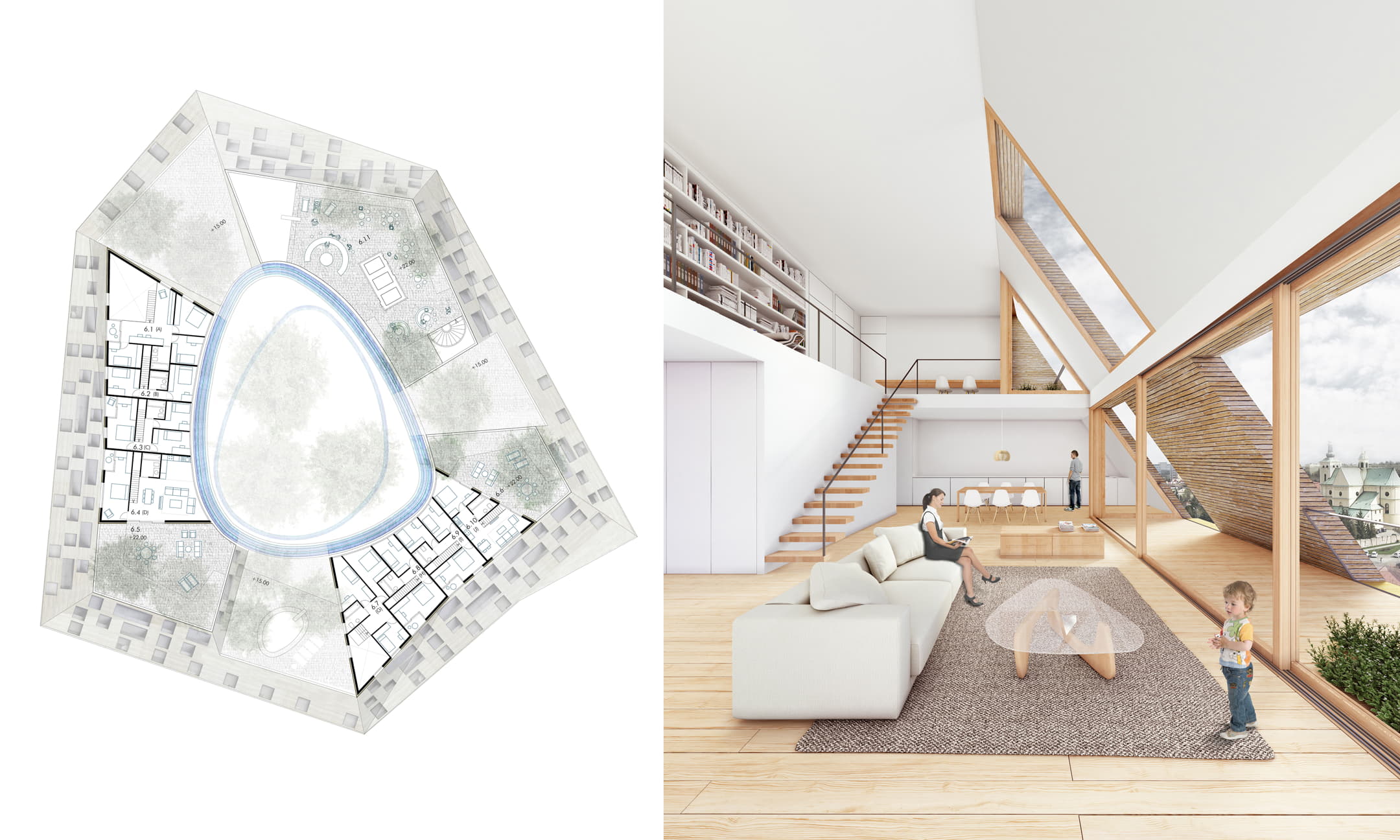
The hybrid programme is distributed by superimposing horizontal layers of different uses, starting with the parking and commercial areas in the underground levels, and freeing up the ground level as a public square crossed by covered passages, galleries and lobbies. On the first and second floors, a fully equipped hotel is developed around the courtyard that perforates the building, while from the third floor onwards different residential typologies are superimposed by category, combining small dwellings with corridor access with more complex units with terraces, crossed ventilation, sunlight from various orientations and different formats of enclosures and openings.
This programmatic range is reflected in the volume through the ascending sponging of the building, beginning as a compact and continuous element that progressively slopes and fragments, multiplying the envelope but reducing its scale externally in order to meet the different requirements of the investor, but at the same time seeking the benefit of the space we share.
RZESZÓW Edificio Multifuncional
En el año 2015 el Ayuntamiento de Rzeszów, ciudad situada en el sureste de Polonia y capital de la región de Podkarpackie, convocó un concurso público de inversión privada para construir un edificio híbrido en su centro histórico, emplazamiento sensible a escasos metros de la Plaza Mayor y en un solar adyacente a la conocida como Plaza de la Alfarería.
Dicho espacio debe su nombre al tradicional mercado de productos cerámicos que se celebrava precisamente en esta ubicación, vacío urbano generado por la bifurcación del antiguo cauce del rio que atravesaba en concreto este punto de la ciudad. La parcela del concurso consistía en una superficie hexagonal de lados paralelos a las manzanas confluyentes cuyo frente principal volverá a configurar este lugar de la memoria.
El proyecto se construye a partir de la dualidad entre presente y pasado, presente representado en la envolvente exterior que reproduce las líneas del lugar y la materialidad del entorno, y pasado recuperado mediante la evocación de las tradiciones locales en el corazón del edificio.
Este contraste se representa con la densidad maciza y poligonal de su fachada y la dinámica ligereza del vacío interior, cuya generatriz curvilinea de sección cónica y el empleo de la cerámica esmaltada en colores frescos y luminosos, pretenden transfigurar este espacio torneado en un catalizador de imágenes y actividades perdidas.
El programa híbrido mencionado se distribuye superponiendo estratos horizontales de diferentes usos, comenzando con las zonas de aparcamiento y comerciales en los niveles subterráneos, y liberando la cota 0 a modo de plaza pública atravesada por pasajes cubiertos, galerías y vestíbulos. En las plantas primera y segunda, un hotel completamente equipado se desarrolla alrededor del patio que perfora el edificio, mientras que a partir de la planta tercera diferentes tipologías residenciales se van superponiendo por categorías, combinando viviendas de pequeñas dimensiones y acceso por corredor con unidades más complejas provistas de terrazas, ventilaciones cruzadas, soleamiento a varias orientaciones y diferentes formatos de cerramientos y huecos.
Este abanico programático se ve reflejado en el volumen mediante el esponjamiento ascendente del edificio, comenzando como un elemento compacto y continuo que progresivamente se va inclinando y fragmentando, multiplicando la envolvente pero reduciendo su escala exteriormente con el objetivo de cumplir con los distintos requisitos del inversor pero al mismo tiempo buscando el beneficio del espacio que compartimos.